Chips around sinks and edges
Include a close-up of the chip and a wider view showing its position. Damage near sink openings, corners and exposed edges needs to be considered in relation to the surrounding material and profile.
Aftercare · Repair advice
If your benchtop is chipped, cracked, separating at a joint or otherwise damaged, start with clear photos and your suburb. Exact measurements are not required for the first assessment; the material, location and extent of the damage determine what may be repaired and the finish that may be achievable.
Visit StoneRepair ↗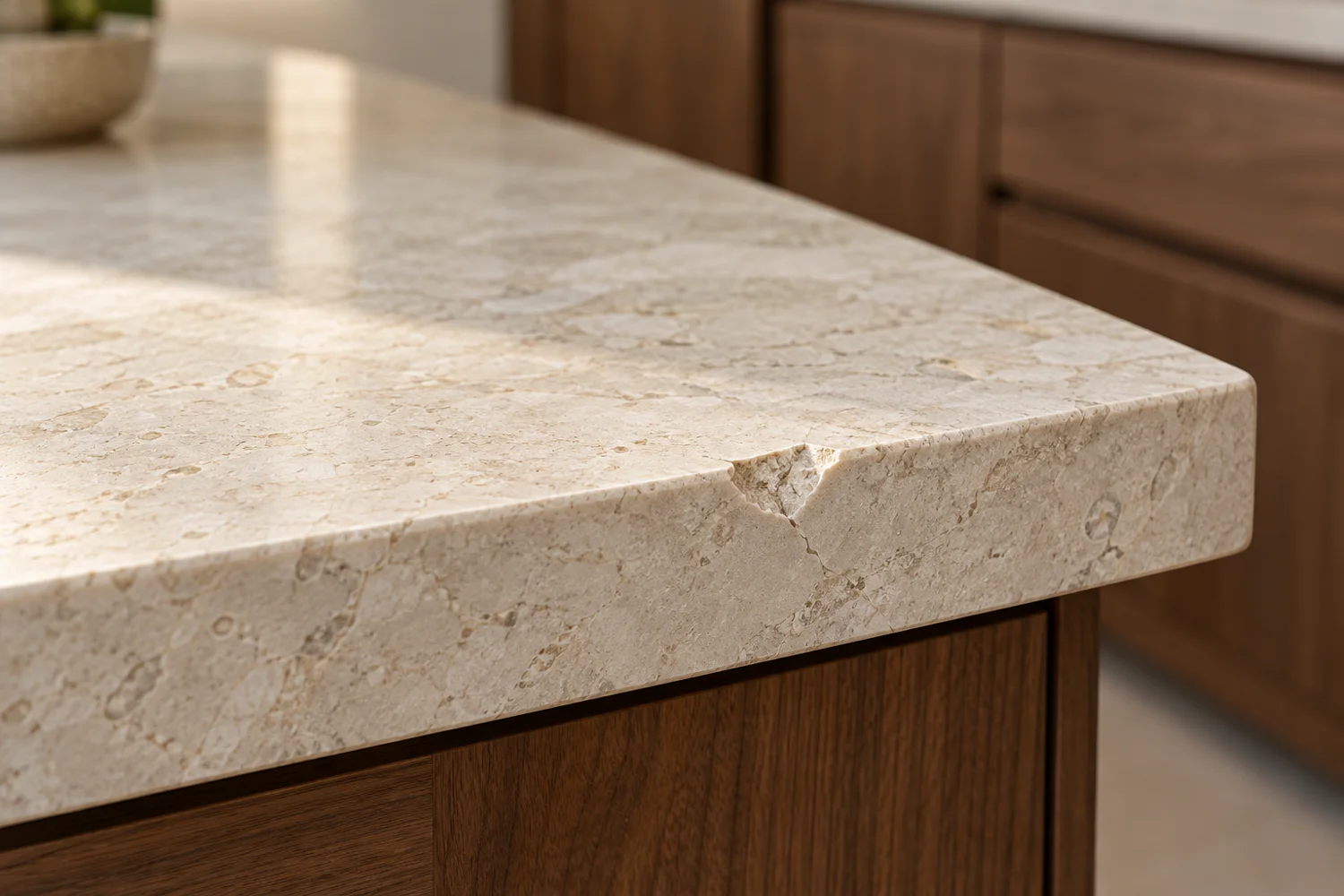
Specialist help for your stone
For stone repair enquiries, visit StoneRepair or call 0448 564 464. Send clear photos and your suburb so the team can assess the damage, discuss the likely result and confirm service availability and pricing.
Include a close-up of the chip and a wider view showing its position. Damage near sink openings, corners and exposed edges needs to be considered in relation to the surrounding material and profile.
Show the full length of the crack or join and any nearby appliances or cabinetry. An assessment may need to consider support or movement as well as the visible damage before a repair is proposed.
A stain, scratch and change in surface finish can require different approaches. Tell the team what happened, the material name if known, and any products already used on the area.
Keep any loose fragments for the assessment. Avoid attempting a cosmetic fix before discussing the damage, as existing fillers or coatings may affect the proposed repair.
Email photos to StoneRepair ↗Australia’s current guidance permits controlled repair or minor modification of previously installed legacy engineered stone, subject to the applicable work-health-and-safety requirements. Do not cut, grind or polish an installed engineered-stone surface yourself. Use a qualified tradesperson who can identify the material, assess the work and follow the current jurisdictional controls. Read Safe Work Australia’s engineered-stone guidance.
A repair may be worth considering when the rest of the benchtop still suits your kitchen. More extensive damage, unsuitable support or a planned change in layout may lead to a different recommendation. If replacement is the appropriate option, explore our benchtop replacement service and material library.
The result depends on the material, pattern, finish and damage. Ask for a realistic explanation of the expected appearance before work starts. A perfectly invisible repair cannot be assumed.
Suitability must be assessed for the exact surface. Natural stone, mineral products, porcelain and sintered surfaces have different characteristics; send the product details and photos so the proposed method can be considered.
No. A suitable crack may be cleaned, filled and supported where practical, but movement or weakness can remain. Replacement is the strongest long-term option for a cracked top.
No. Start with your suburb, a whole-benchtop photo and close views of the damage. Include the material name and an appliance model where relevant. Final scope is confirmed after assessment.
Protection film should not be treated as a guarantee against impact damage or chipping. Ask about compatibility, care and the selected product limitations for the exact surface.