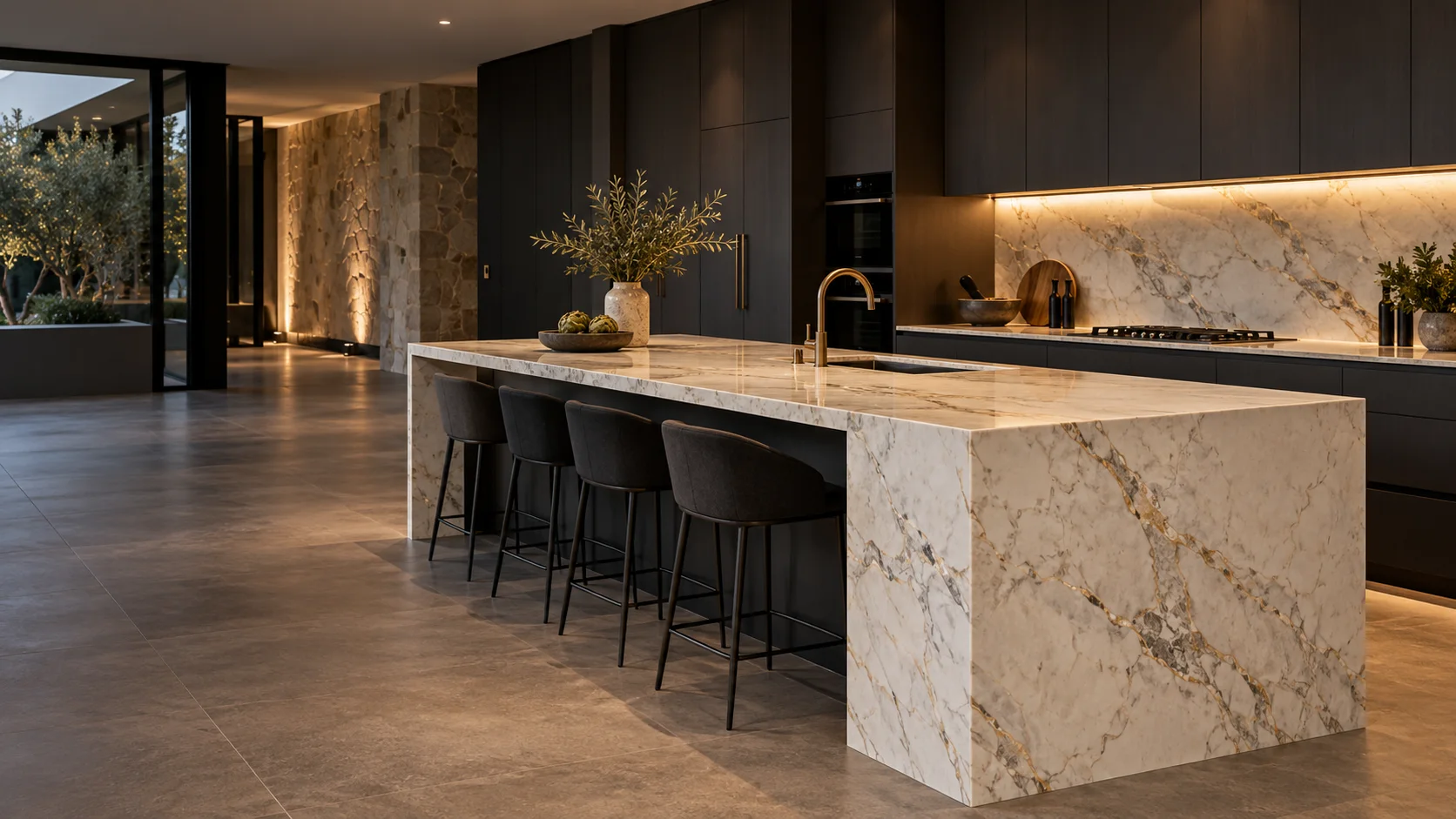
Choose an actual product, not just a category
Porcelain is a broad material description; the selected brand, range and product specifications matter. Send the product name, colour and preferred finish, or share inspiration if you are still narrowing the choice. We’ll discuss the surface in the context of your plan and confirm the relevant product information before the fabrication scope is finalised. A sample can help you assess the finish alongside cabinetry and flooring.
Look at the pattern across the whole surface
A small sample may not show the full character of a large-format pattern. Consider the appearance of an island, splashback and waterfall together, especially if you want the pattern to connect between faces. Ask how the available slab format affects the cutting layout and joins. The visual result depends on the actual selected product and the proposed layout, not only the photograph in a catalogue.
Discuss thickness and visible edge details
The apparent thickness of a benchtop is a design choice that needs to be coordinated with fabrication. Ask which edge details are appropriate for the chosen product, how corners will meet and whether a built-up look is being proposed. Include those decisions in the quote. A reference picture is helpful, but the finished detail must be considered against the actual material, cabinetry and installation requirements.
Plan cutouts and support before cutting
Send the sink and cooktop models with their installation documentation and identify every tap or accessory hole. Confirm the cabinet layout, island support and any seating overhang at the same time. Fabrication and installation should follow the selected product requirements. Avoid transferring assumptions from a different benchtop material: a detail that looked right elsewhere may need a different approach for this particular surface.
Use the supplier guidance for care decisions
Ask for the selected manufacturer’s care and maintenance instructions, including recommended cleaning and guidance around heat, impacts and any chemicals used in the space. Those details are more useful than a general promise that every porcelain product behaves identically. For commercial or demanding applications, explain the intended use before selection so product suitability can be reviewed as part of the project conversation.