Use these illustrated cross-sections as a starting point for your kitchen, island or vanity. Profiles are indicative and not to scale. The exact stone, slab thickness and manufacturer’s fabrication requirements determine the final detail.
Pencil round / eased edge
A restrained finish with a gently softened top corner. A useful starting point for contemporary kitchens, fine cabinetry and a clean slab silhouette.
Discuss the required corner radius for the exact product; a visually square edge should still have the manufacturer’s specified easing.
Bevelled edge
An angled cut adds a fine highlight along the front of the benchtop. A small bevel feels crisp; a wider bevel makes the edge more visible.
The bevel width, exposed body colour and slab thickness need to be considered together, particularly on printed porcelain surfaces.
Half bullnose
A rounded upper edge flows into a flatter lower face. It gives the benchtop a softer appearance while retaining a defined underside.
Ask to see a fabricated sample. The curve and visible stone pattern will change with slab thickness and material.
Full bullnose
A continuous rounded front creates a traditional, softer silhouette. It can complement classic cabinetry, curved details and selected vanity designs.
Availability depends on thickness and material. Confirm the full radius with the fabricator before specifying it on a thin slab.
Ogee edge
A decorative curved profile adds depth to classic interiors. It can work especially well when the benchtop is intended to be an architectural feature.
Best discussed for suitable natural stone or mineral surfaces. The stone, thickness and fabrication limits determine whether the detail is practical.
Mitred built-up edge
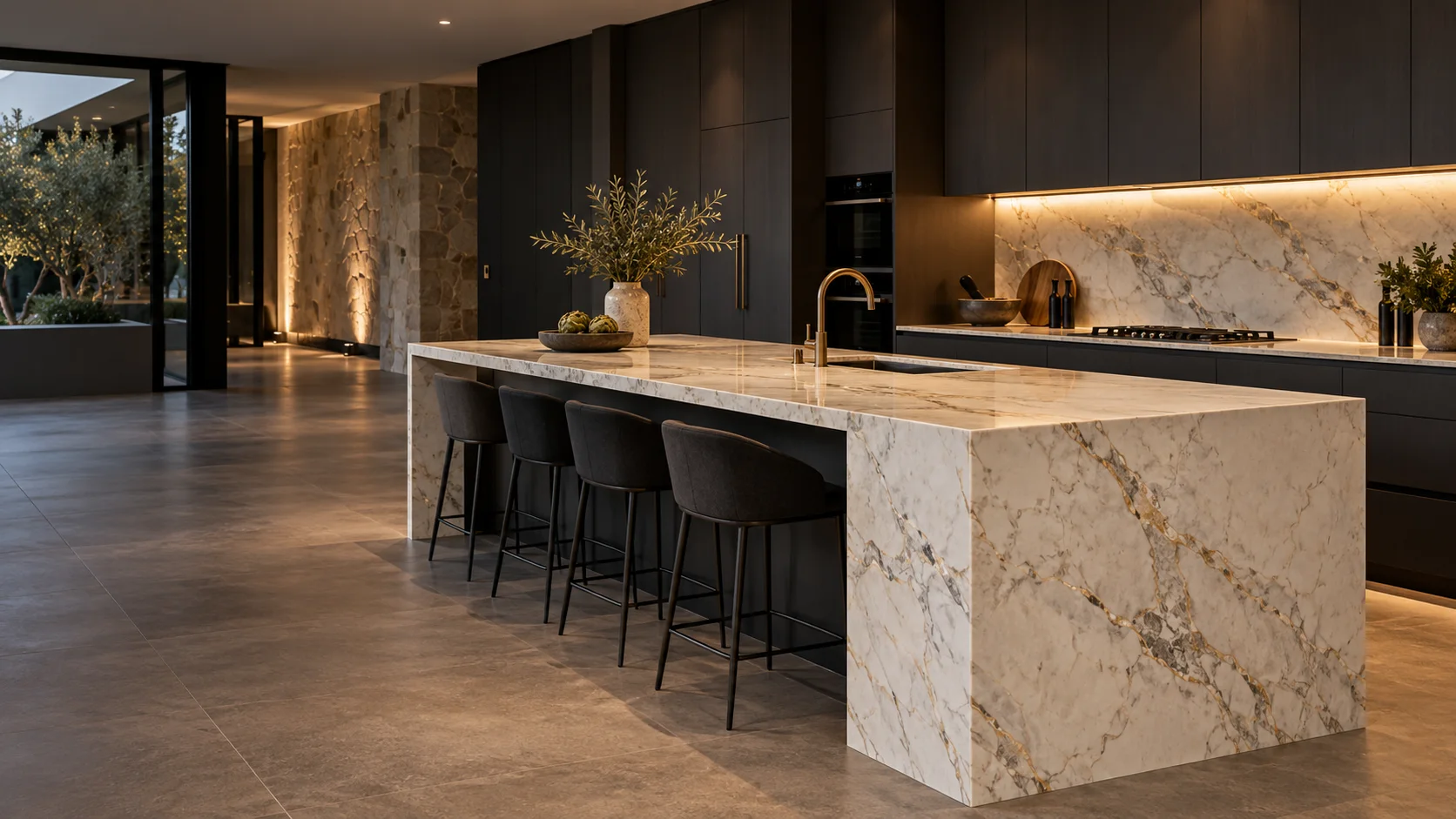
Two pieces meet at an angled join to create the appearance of a deeper slab. It is often considered for substantial islands and waterfall ends.
Plan the apparent thickness, vein alignment, corner detail and cabinet clearance. A mitred join remains a fabricated join, and its appearance varies by material.
Sharknose edge
A tapered underside makes the front look slimmer. It can give an island or floating vanity a refined, lighter outline.
Allow for support and cabinet clearances. Minimum edge dimensions and product suitability must be confirmed before this detail is selected.
Beyond the front edge
Waterfall ends, thickness and pattern.
A waterfall end continues the stone down the side of an island or cabinet. It is an installation detail rather than a single edge profile: the join, exposed corners, floor junction and pattern direction all need planning. Ask to review the slab layout before fabrication, especially with expressive veining.
A built-up edge can create a thicker appearance without making the entire benchtop the same thickness. Tell us your preferred finished look and cabinet height so the edge, appliances, drawers and seating can be considered together.
Which edge suits your material?
Porcelain & sintered surfaces
Thin slabs and surface-printed patterns require particular attention to exposed edges, minimum radii and mitred joints. The side of a slab may look different from the face. Choose from the selected manufacturer’s approved details and inspect a finished sample.
Natural stone & mineral surfaces
The stone’s structure, veining, finish and thickness influence what can be fabricated. More decorative curves may be possible on suitable products, but natural fissures and fragile areas need assessment. Agree the detail using the exact slab or product.
Before you approve fabrication.
Choose the exact material, colour and surface finish.
Confirm slab thickness and the finished edge dimensions.
Review exposed corners, sink edges, joins and waterfall ends.
Approve a sample or drawing of the agreed profile.
Which edge is easiest to live with?
A gently eased or pencil-round edge is often a practical starting point, but no profile makes stone chip-proof. Material suitability, adequate support, corner treatment and careful use all matter.
Can every profile be made in porcelain?
No. Options vary by product and thickness. We check the manufacturer’s current fabrication guidance before confirming your edge detail.
Does the edge affect the quote?
Yes. Decorative shaping, mitred build-ups, waterfall pieces and vein alignment can change fabrication time and material use. Include these details in your initial enquiry.