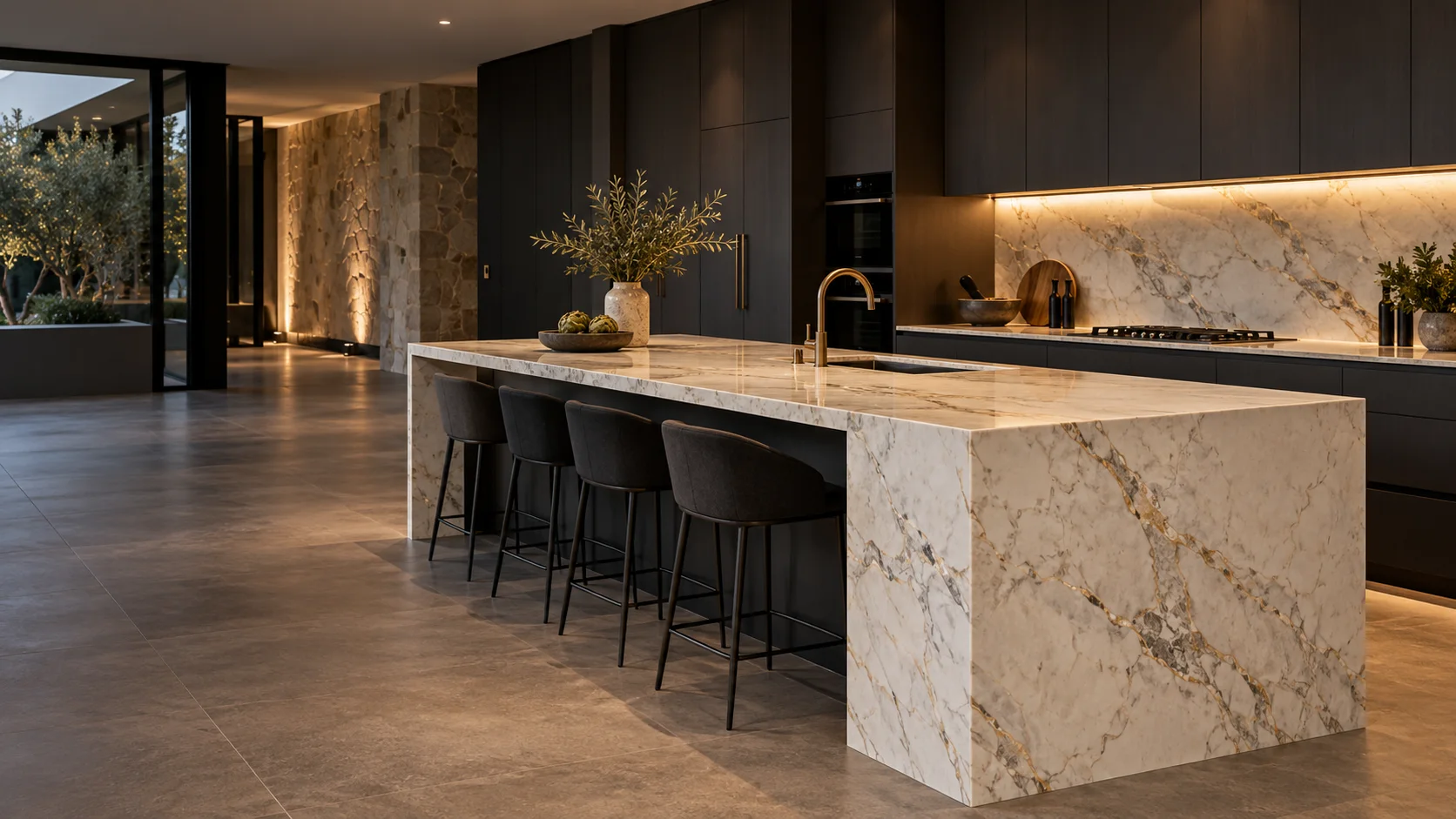
Can the cabinets stay when the benchtop changes?
Sometimes a kitchen needs a new surface rather than a new cabinet layout. Retaining sound cabinetry can be part of the brief, but the existing top is not proof that the cabinets suit the replacement material. The cabinetmaker and fabricator need to review the condition, support arrangement and proposed surface together. Start with photos and a description of what you want to keep; you do not need exact dimensions to make the first enquiry.
This guide focuses on the decisions beneath and around the new top. For removal, access and trade scheduling, also read our replacement planning checklist.
Show the cabinet structure, not just the doors
A freshly painted door can hide a cabinet carcass that needs attention. Photograph the inside of the sink cabinet, corner units and the space beside the dishwasher. Include visible swelling, loose fixings, damaged panels or gaps where cabinets have moved. Describe a door that no longer closes properly or a top that rocks, rather than assuming it will be corrected by adding stone.
Ask the cabinetmaker to assess whether the units are stable, level and suitable for the intended load and product. Reinforcement, repairs or replacement units may be needed. Support details depend on the specific surface, thickness and openings; there is no single arrangement that can be approved from the colour sample alone.
Separate slab thickness from finished edge height
The thickness of a slab and the visible depth of its edge are different decisions. A built-up or mitred edge can change the appearance without representing a solid slab of the same depth. Discuss the whole assembly, including any required substrate, instead of comparing catalogue thicknesses alone. Our edge profile guide helps explain the visible options.
Record the existing finished top height and photograph how it meets the doors, end panels and tall appliance housings. If the replacement changes that height, identify the consequences before fabrication: a retained splashback may show a gap, the top of an end panel may become exposed, or an adjacent surface may no longer align. Agree who handles these finishing details.
Inspect the splashback junction before removal
Show whether tiles, glass or a stone splashback sit directly above the current top, and photograph the lower junction closely. Removal can affect an adjoining finish; retaining it should be an explicit part of the scope rather than an assumption. Discuss whether the new top meets it, whether an upstand is proposed, and how any gap or repair will be finished.
For a new splashback, confirm the sequence after the cabinetry and top positions are established. Smartstone's purchasing guide places cabinetry before benchtop installation and benchtops before splashbacks. That sequence is particularly useful when several retained and replacement finishes meet.
Check appliance openings with the new assembly
A dishwasher should remain accessible for servicing and future removal. Tell the cabinetmaker and installer about its model and the available opening, especially when altering the top assembly or adding support. Do not assume the existing appliance will still slide out after the new surface is fitted.
A sink or cooktop change also needs review inside the cabinet. Bowl depth, fixings and appliance clearances should be checked against the exact manufacturer's drawings. Reusing a fitting does not mean copying its old opening automatically suits the new material. See our cutout planning guide for the information to provide.
Confirm cabinet readiness before final measurement
Finish agreed cabinet repairs, levelling and layout changes before the fabrication dimensions are confirmed. Coordinate the final measurement stage with the fabricator: the point at which the old top comes off and hidden conditions can be inspected needs to be agreed for your kitchen. Avoid making cabinet changes after the fabrication layout is approved without discussing their effect.
Use current instructions for the exact product. Smartstone's trade resources provide a route to its fabrication manual; ask the fabricator to confirm the applicable requirements rather than applying a generic support rule from another surface.
Send a brief that makes the retained items clear
- Your suburb, whole-kitchen photos and any available rough sketch.
- Cabinet interiors, damaged areas, end panels and splashback junctions.
- The named surface and finish you are considering.
- A list of cabinets, splashbacks, sinks, taps and appliances that will stay.
- Proposed cabinet repairs or changes, and who is arranging them.
Discuss the scope through our benchtop replacement service, compare AUSKstone collections and other surface options, or start an enquiry with your photos. For local planning, explore Seaforth, Mosman and the Northern Beaches.